Saturday, March 22, 2014

Fruit gives me eczema. Do I have a fruit allergy?

One of my students wrote me, asking what to do about a "fruit allergy" that they were experiencing. They wrote:
Hi Raederle,
I really like your website and e-course.
I want to eat more raw foods, but it seems like I am allergic to most raw fruits.
I got sick after a trip to Thailand, and now suffer chronic gastritis and IBS. I can eat all cooked meats, most cooked veggies except zucchini, squash etc... I cannot eat raw fruits. I either break out in eczema or have bad gastritis from it.
What do you recommend I do so that I can start to eat raw and not have an allergic reaction?
It is possible that you have an allergy, however there are four other likely things:

The importance of food combining

1. Problem: Fruit and meat are the worst food combination and commonly cause problems in the intestines which can show up in a variety of ways, including eczema, bloating, and gas.
Suggestion: Try only eating fruit at least eight hours after consuming meat. Ideally, wait a full twelve hours after eating meat, because it takes a long time for meat to clear the system. For some people, meat takes nearly a week to fully leave the bowels.
In my meal plans I carefully selected when meals should be eaten in relation to one another to maximize digestive efficiency and comfort. However, my meal plans do not contain meat at all. If they did, I would carefully arrange only vegetables and spices in the twelve hours following a meal containing meat.

Pesticides on the fruit can cause digestive disruptions

2. Problem: Fruit is sprayed with a lot of pesticides. Many people have allergic reactions and even seasonal allergies entirely vanish when switching to an entirely organic diet.
Suggestion: Try eating only organicly grown fruits, and emphasizing organic vegetables as well.

Genetically modified foods have been shown to affect intestinal villi

3. It's interesting that you mention zucchini and yellow squash in particular. Problem: Almost all zucchini in America (and in many other places now) is genetically modified.
Genetically modified foods have been shown in lab studies to affect how intestinal villi function, sometimes flattening the villi and preventing proper nutritional uptake, and preventing proper colonization by beneficial bacteria. Even when the villi are not flattened, changes occur which inhibit probiotics and encourage harmful bacteria to colonize the intestines. It's normal to have a lot of bacteria, but some bacteria forms are good (producing enzymes, amino acids, and vitamins for us), and some bacteria forms are bad (producing alcohol and other toxins).
In fact, our bodies have ten bacteria cells for every human cell. This means it is crucial that the bacteria in our bodies works symbiotically with us to promote good health. Genetically modified foods disrupt this balance. The following conventional crops are primarily genetically modified: corn, papaya, yellow squash, zucchini, canola, alfalfa, cotton, sugar beets, and soy. The difficulty in avoiding these foods becomes evident when one considers that conventional soy and corn are fed to most livestock, and corn syrup and beet sugar are in most processed packaged foods.
Suggestion: To avoid genetically modified foods, buy organic products and produce and grass-fed meat only.
Try this for a couple weeks and let me know if you see a difference. Since you're already sensitive right now to raw foods, start with just organic cooked foods and don't introduce the raw organic foods for at least five days. That will give your body some time to relax and adjust.
For anyone reading this who is experiencing irritable bowel syndrome who is not sensitive to raw foods in particular, when switching to organic, don't switch to "all cooked" as well. I'm suggesting this in particular for people who are experiencing worsened symptoms when eating raw foods. The idea is to eat the least symptom-generating diet you know of when you switch to organic foods for at least five days, preferably seven days. Then introduce a single meal of raw organic food that previously would have been irritating and see how you fare.

Chewing your food thoroughly or making smoothies makes raw food easier to digest

4. Problem: Raw food is more tough and crunchy than cooked food, so often people don't chew it well enough. The stomach has acid, but it doesn't have teeth. If lumps of food make it to the intestines, the non-beneficial bacteria have a field day, causing abdominal pain, gas, and sometimes more serious reactions such as acid reflux, weight gain and ulcers.
Suggestion: When you first introduce a raw food, after eating all-organic for five to seven days, make sure you either blend the food into a puree or smoothie, or chew very thoroughly. Often the majority of discomfort caused from eating raw food is due to chunks of food making it to the intestines without properly being broken down.

Other possible causes for gastritis, acid reflux, and IBS

If you're reading this and you experience irritable bowel syndrome, here are some other possibilities:
  • You eat too many beans. Click here to learn why beans are a bad idea if you have IBS or gastritis.
  • You eat too much globular protein. Click here if you're unfamiliar with what globular proteins are.
  • You eat too many nuts. Click here to learn why nuts can be aggravating to a weakened digestion.
You can learn more about living to your fullest potential and fully healing on all emotional and physical levels by taking my free e-course. Sign up on below on the right.

Tuesday, March 18, 2014

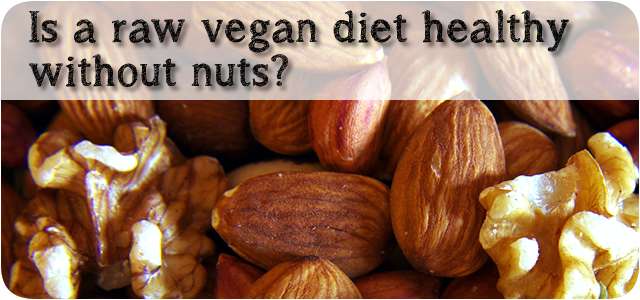
Can a raw vegan avoid nuts? If I have a nut allergy, can I eat a raw food diet?

Can a raw vegan be healthy without nuts?
The short answer is, "Yes!"
In fact, I encourage all raw vegans to eat very few to no nuts. Eating too many nuts can actually be very toxic and cause nut allergies.
There are a number of things to be wary of with shelled nuts.
Shelled nuts are...
  • easy to over-eat
  • high calorie and high fat
  • prone to mold, which leaves behind toxins, particularly aflatoxin
  • sometimes labelled raw, yet not actually raw
  • often moldy without showing signs of being rancid visually
  • stored for long periods of time and oxidized
  • not very nutritious to begin with
Several of my books limit or do not include nuts. This is because most raw recipe books have nuts in nearly every recipe.
In fact, I've bought a recipe book that called for a whole cup of nuts in the majority of the recipes. Generally cashews, which you will not find raw at the grocery store. “Raw Cashews” at your local market only means “not roasted.” Cashews are boiled out of their shell. They must be hand-cracked to be raw.
One cup of oranges is fine – ten cups of oranges is fine. Ten cups of spinach, lettuce, cilantro, kiwis, kale, cucumber or apples – completely okay and healthy. Ten cups of nuts, however, would leave you curled up on the floor holding your stomach.
If you consume two cups of nuts in a single day during your transition to raw veganism, that's fine. It's undoubtedly still an improvement from the old diet. However, over time, eating more than a couple handfuls in a day is very wearisome for the digestive system – and sometimes painful.
Typical peanuts, in particular, should be completely avoided. They are virtually 100% guaranteed to contain aflatoxin (a waste product from mold). This especially is a problem for folks with Candida Overgrowth.
Raw seeds, coconuts, avocados, raw olives (hard to find), durians (really hard to find) and fruits with some fat content (pomegranates, cucumbers), are excellent fat sources when avoiding nuts. Make sure not to over-do any fatty foods however; fatty foods take a long time to digest.
I am not suggesting you stop eating nuts forever. I am just aiming to show that a raw vegan diet can be healthy and enjoyable without nuts. They are not required as a source of protein or fat. That is why my very first recipe book was Nut-Free Raw Recipes. I had found that I felt better without nuts in my raw diet and I now share the recipes I used to get away from nuts with you.
You don't need nuts for protein. The best source of protein is amino acids.
Amino acids are in raw vegetables, and they are particularly high in sprouts (including bean sprouts and sprouted nuts). The other form of protein is chains of amino acids, called proteins, which are bio-available in raw seeds, raw nuts, bean sprouts and grain sprouts.
There is detailed information and videos about protein, here on my website.
It is unlikely that you'll eat too little fat by abstaining from nuts, even on a raw diet. By eating two tablespoons of seeds daily, it can be ensured that you'll get enough fat. Chia seeds, sesame seeds, pumpkin seeds and sunflower seeds are recommended. I do not advise more than a tablespoon of flax seeds daily.
I definitely discourage buying pre-ground seeds which can be rancid when purchased. You can grind your own seeds in a coffee grinder, spice grinder, food processor or vitamix.
Many raw vegans get enough fat and enough protein without consuming any nuts, seeds, avocados, durians or olives. Tim Van Orden, a marathon runner, only eats raw fruits and vegetables.
The main issue with nuts in long-term consumption is toxins that tend to be present in the nuts. They are stored for long periods of time and they oxidize and go rancid.
Unfortunately, you almost never get fresh macadamia nuts in America. My Australian friends tell me that macadamia nuts here taste rancid to them because they are used to the fresh ones they can get in Australia.
If nuts are consumed, it should be in moderation (I suggest one nut per day in my food pyramid), and they should be stored in the freezer.
For fatty dressings, sesame seeds may be used. For interesting puddings, chia seeds may be used. Almost any seeds will make great raw pizza crusts in the dehydrator. For desserts, soaked oat groats may be used in the crusts, or chia seeds. Flax oil may be used in some recipes that call for almond oil. It is completely possible to fully avoid nuts and still enjoy a healthy raw vegan diet.
The other reason why I discourage nuts is because of the allergy epidemic with nuts. I don't want people to think that a raw diet requires nuts and thereby think people with an allergy to nuts should stay away from raw food. On the contrary, nut allergies often develop in people who especially need a detoxifying diet. Their body is saying loudly, "I can't handle the toxins in nuts!" which is all the more reason for a primarily raw diet.
Have a nut allergy? Want to minimuze nuts? Trying to reduce calories from fat? This meal plan is for you!
Includes Lettuce Bruschetta Boats, Sunny Tomato Noodles, Lemon Ginger Porridge, Flavor-Explosion Muffins (shown on the cover), Spiced Cream Salad and many other fantastic nut-free recipes. This 7-day meal plan is nutritionally complete, getting you all you need in thirty different nutrient categories, including Omega-3, Omega-6, Iron, Calcium and Zinc just to name a few.
Nut allergies? Want to enjoy gourmet raw treats without using two cups of nuts per recipe? This book brings together gourmet flavors, convenience and nut-free ingredients. And you don't need a dehydrator!
Nut-Free Raw Recipes includes:
  • 5 breakfasts, including muesli-like dishes and pudding
  • 2 drinks, showing how to warm up a drink and keep it raw
  • 2 entrees, both dishes that can be varied to make a variety of dinners
  • 12 desserts, including Mint Truffles and Spicy Strawberry Pie
"Nut-Free Raw Recipes is great! I like how you explained the 'whys' and 'hows' of things, and the photos look yummy. One of my favorite parts are the quotes you include with each recipe."

~ Veronika S., San Francisco, CA (March 2011)
Hi Raederle,
Last night I made Magnificent Minty Mango with hemp seeds and my husband and I LOVED it.
Tonight I made Vanilla Cream Pie and we LOVED that too!
Looking forward to doing more.
Love, Toni V., Buffalo, NY (2011)

Keidi's skin improved in the first week after buying my recipe books

Raederle's recipe books are amazing, packed to the brim with delicious, mouthwatering dishes which as an added bonus are all amazingly healthy in every way possible. I've only been following the book for the last week yet I already feel healthier and my skin looks more radiant and glowing than ever before. Thanks Raederle! Thank you for all your amazing health and nutrition tips. You're amazing!
~ Keidi Keating, The Word Queen, Málaga, Spain (January-April 2012)

Experience Elegance 8-Day Meal Plan

This 8-Day Nutritionally Complete Raw Vegan Meal Plan is ideal for raw foodies who want to minimize nuts and seeds most of the time, yet splurge once in a while. That's why this plan has eight days.
The eighth day is "splurge day" (including raw cheesecake!) which I think we should all have once or twice a month. Your emotional health is just as vital as your physical health. The more physically healthy you are the easier it is to be emotionally healthy. I find that most of us feel more comforted and contented with our lives when we splurge on occasion, and contentment is emotional health.
Includes dinners such as Creamy Cucumber Wraps; Lunches such as Raisin-Kale Muesli and Vanilla Fruit Medley; Breakfasts such as Chocolate Chia Pudding and Blackberry Carob Milk.
Raederle's meals are honestly some of the most deliciously healthy meals I have ever enjoyed. She is passionate in her work and has extensive knowledge. Her creations are immensely tasty and healthy.
I highly recommend experiencing Raederle's love-inspired talents.
~Aaron Irons, California, (2011-2012)
If you're thinking, "Yes! An exact step-by-step plan is just what I need to get on the right track!" then look at purchase options below.
If you buy them all together, you save over $200!

Bone Building Package

$122

$59

That is a $63 savings!

Bone Building Package Contains:

  • Collecting Calcium: The Bones Plan ($40)
  • Vitamin Confusion Solution ($62)
  • Select, Store, Eat & Digest Raw Food ($20)
  • 1 Health Question Answered In Detail ($20)
  • You will receive these via e-mail.

    No Nuts Needed

    $85

    $39

    That is a $46 savings!

    No Nuts Needed Package Contains:

  • Low-Nuts Experience Elegance 8-Day Plan ($25)
  • Nut-Free Delectable Delights 7-Day Plan ($25)
  • Nut-Free Raw Recipes ($15)
  • 1 Health Question Answered In Detail ($20)
  • You will receive these via e-mail.

    Raw Master Plan

    $312

    Just $98.00!

    That is a $214 savings!

    Raw Master Plan Contains:

  • Experience Elegance 8-Day Plan ($25)
  • Blissfully Balanced 7-Day Plan ($25)
  • Nut-Free Delectable Delights 7-Day Plan ($25)
  • Collecting Calcium: Overcoming Osteoporosis & Arthritis Naturally ($40)
  • Nut-Free Raw Recipes ($15)
  • Vitamin Confusion Solution ($62)
  • Select, Store, Eat & Digest Raw Food ($20)
  • 5 Health Questions Answered Via E-mail In Detail ($100)
  • All of these items are digital. You will receive them via e-mail.
    And, this package will not break your budget in groceries. There is minimal use of "superfood" powders and no use of expensive pre-packaged dehydrated snack-bars.

    Also, equipped with Vitamin Confusion Solution, you'll be able to select the healthiest whole foods to meet your specific needs on your budget.

    ~ Raederle
    Have friends with allergies to nuts? Click here to return to the top and share on facebook, pinterest and twitter!

    Thursday, March 6, 2014

    My stomach hurts after everything I eat! What should I do?

    “My stomach has been hurting after everything I eat. I'm at a place where everything feels potentially harmful. What should I do?”
    My condolences. I've been there, and it's rough. The good news is that I've recovered and that you can too.
    For three years I suffered terribly after every meal. What changed? I started to learn the specific causes of the problems. It seemed like everything was causing me pain. However, most of my meals involved ten or more ingredients. If I ate ravioli and got acid reflux, burning sensations in my stomach, etc, what caused the pain? The cheese? The sauce? The seasonings? The pasta?
    You don't need to suffer any more. Stick with me through this page and you'll have the information you need to heal and feel good again. Or, if you prefer to listen, I have new podcast episode on digestive healing. You can download it and listen on your commute or while taking a relaxing bath.

    Digestion: How to eat to lessen the load on your digestive system.

    Stomach and intestines should be empty as much as possible between meals. In order to do this, digestion times must be considered:
    Raw melon: 20 minutes
    Raw high-water fruits: 30 minutes
    Dense fruits (bananas): 40 minutes
    Leafy, high-water greens: 1 hour
    Dense veggies (carrots, beets): 1.5 hours
    Cooked greens and starchy vegetables (cooked yams, cooked carrots): 2 hours
    Cooked grains (pasta, bread, wheat crackers): 2-4 hours
    Fatty raw foods (raw seeds, raw nuts, avocado): 3-5 hours
    Medium-protein high-fat cooked foods (dairy, meat, eggs): 4-5 hours
    High-protein cooked foods (beans, lentils, buckwheat): 6 hours
    Important Notes:
      1. These times are accurate for the item eaten alone.
      2. Combining foods increases the digestive time dramatically.
      3. Unhealthy digestive systems digest more slowly.
      4. The listed times above are for healthy digestive systems.
    Using the digestion times above, you want to emphasize meals from the beginning of the list. Melon for breakfast is excellent for healthy bodies and okay for many people with a struggling digestion. If melons upset your belly, go for berries, (peeled, seedless) cucumber, celery, or lettuce.
    Then for brunch, if you eat one hour after the melon, you're giving (in theory) forty minutes of stomach-clean time before eating again. The reason why this is "in theory" is because digestion times vary for every human, and every condition.
    For brunch, you could eat berries and an apple. Again, if you have a condition (such as diabetes or hypogycemia) which prevents you from eating an apple by itself, you can add celery for added fiber or substitute this recommendation with the other mild foods mentioned above. Plain romaine lettuce is also great for breakfast and brunch.
    If you eat again two hours later you get an-hour-and-a-half of stomach-clean time. If for lunch you eat a salad and some cooked starchy greens (like boiled yams and carrots), it'd take around two hours to digest, so you'd want to wait four hours before eating again.
    If your stomach hurts after apples, citrus fruits, melons, or other fruits, then your body's flora is probably out of whack. Show me a diabetic, and I'll show you severe flora imbalance. Having struggled with flora issues since birth, I can relate! Increasing probiotic intake combined with cleansing, and starving off bad bacteria can remedy this issue – but it's not an easy path. It takes at least six months to re-balance intestines. There is no quick fix. When balancing bacteria in your gut, you're building a colony. Think of it like founding a city. Cities can not be built in a day!
    To build healthy flora, there must be good bacteria coming in. Today, the place to get good bacteria comes from fermented foods. In the wild, animals get good bacteria from rolling in the dirt, drinking from streams, and eating un-washed, wild foods. Because we're no longer wild animals, we require a daily intake of fermented foods. This is why the macrobiotic diet has fermented food at every meal, because healing from cancer (or any condition) requires healthy bacteria balance in your body.
    While yogurt is what people often turn to, it often is the least effective option. The milk is pasteurized before fermenting, which means the natural probiotics present in the cow are not present. This is a good thing if we're talking about factory-farmed cows, because their milk might make you sick otherwise.
    Ideally, any dairy consumed would come from well-loved animals that graze on grass, and the dairy would be rich with probiotics and enzymes naturally coming from the animal. Since that isn't a readily available option for most people today, I recommend avoiding dairy entirely – especially if your stomach is hurting regularly!
    Site note for those who love dairy: If you really feel the need for butter, that is generally okay in small amounts if organic, and consumed in small amounts with vegetables. Natural butter is much easier on your body than its lab-made chemical substitutes. But note, it takes an hour to digest 10 grams of fat in a healthy digestive system!
    One stick of butter is 92 grams of fat. When I was growing up, we put a whole stick of butter on the popcorn which my dad and I split. That meant 41 grams of fat each, which equates to four hours to digest the butter alone – not counting the added complexity of digesting the popped corn which is loaded with acrylamide (which we'll discuss a little later on).
    You can get healthy flora from the following items:
    • Sauerkraut (fermented cabbage)
    • Kim chi (fermented vegetable mix, usually spicy)
    • Fermented coconut water (Inner Eco is the brand most commonly available)
    • Miso (fermented soy)
    • Tempeh (fermented soy)
    • Natto (fermented soy)
    • Kombucha (fermented tea)
    • Water kefir (fermented water and sugar)
    • Apple cider vinegar with the "mother" included (fermented apples)
    The above items all contain different blends of flora, which are also, in turn, different from the flora found in dairy kefir and dairy yogurt. While there is also soy yogurt and almond yogurt available in stores, these are often full of suspicious thickeners and other unsavory ingredients that won't boost your health.
    The significance of the difference in flora between fermented foods is many-fold. It means that eating sauerkraut will not provide the same benefits or results as kombucha or miso. In my experience with my clients, there is usually one fermented food that will help more than all the rest, but it will vary from person to person.
    One woman I met had tried making her own sauerkraut, but this didn't help. She owned a seaweed company and ate buckets of of nori, laver, spirulina and other sea-vegetables, and incredibly, that didn't solve her digestive problems either. She tried making her own water kefir, which didn't do the trick. And then, finally, she started making her own kombucha, and finally, her stomach flattened, the gas stopped, and she could eat a whole foods diet without having to worry if a baked starchy meal would give her indigestion.
    In my case, kombucha has also been the answer. For my husband, tempeh has helped a lot. For another woman I know, natto has been very key to her healing, especially because this one of the richest sources of vitamin K2, which is the vitamin that directs your calcium to your bones. Whether you have enough vitamin K2 or not is the differences between calcium in your arteries and calcium in your bones (where it belongs!).
    I have yet to hear of anyone healing from severe digestive issues on sauerkraut alone, but many people report reduced symptoms from including sauerkraut in their diet, especially if it is raw or home-made. (If is sold on the shelf, it has been pasteurized, which means that virtually no probiotic benefit will be imbued.)

    But wait! Fermented food hurts my stomach!

    This is unfortunately common with digestive disorders. For example, say you have low stomach acid. This can mean that you are more vulnerable to helicobacter pylori, commonly known as H pylori, which likes a more alkaline environment than the typical healthy stomach. If you have H pylori, then every time you eat something acidic the H pylori will be very unhappy and start producing extra ammonia (which is alkaline).
    Ever seen baking soda combine with vinegar? That's what starts happening in your stomach when you eat acidic foods and you have H pylori. This is very uncomfortable, but it actually helps get rid of the unwanted bacteria. To fully remove H pylori is quite the trick. You may want to opt to get antibiotics to take care of it, but if you do, be sure to take a lot of probiotic supplements in addition to fermented foods at every meal. This is vital if your internal flora colony is going to be healthy.
    Fermented foods can also cause gas. Probiotics are bacteria. Bacteria eat things and then produce some sort of excrement. Probiotic excrement is good for you generally, but sometimes gas is involved, which is uncomfortable and not good for you in the long-run. Prolonged gas that goes on and on for days, where you're very bloated and uncomfortable, distorts the intestines. This distortion provides pockets where bad bacteria can hide, becoming even harder to clean out with fiber and probiotics. That's where juice-cleaning comes to the rescue.
    If fermented foods give you discomfort and gas, it may be best to start with an "elimination diet" where you eat only foods you know give you absolutely no symptoms whatsoever. I recommend including cucumbers, celery, lettuce, sunflower seeds (in small amounts), chia seeds, flax seeds (ground in your coffee grinder or vitamix), small amounts of fresh-squeezed lemon, peas, organic tart apples, boiled potatoes, brown rice, steamed kale, and small amounts of apple cider vinegar.
    If you feel the need for meat, stick to free-range, organicly-fed animals and stay away from any part of the cow or pig. Also, be sure to not eat anything sweet with your meat or any time in the day after the meat.
    If you have a nut allergy or any seed allergies, and have not yet tried flaxseeds, do not include them in your elimination diet. Flax is a fairly common allergy, although not nearly as common as sensitivity to peanuts and corn. Speaking of which, stay very clear of peanuts, corn, and wheat!
    After one week symptom-free, add in one fermented food. I personally have a bias toward kombucha (since that's what worked for me), and recommend trying kombucha first. Drink it slowly! Gulping kombucha will give most anybody gas, even if they have a healthy body. Drink 16 ounces of the course of an hour or two. Like fine wine, kombucha should be sipped and savored. Also, do not consume kombucha with fruit or with large meals. It is best consumed beside light snacks, very small meals or by itself.
    The chances are that your body will experience mild discomfort from any fermented food even after a week of clean-eating, even if the fermented food is good for you. Take note of everything you feel for 24 hours after consuming the fermented item. If nothing more severe than mild burning or one or two farts occurs, then go ahead and have another serving on the following day. Continue all week, and watch to see if symptoms improve or worsen or neither. If they improve, try adding in more fruits, vegetables and seeds.
    Don't add more than one new food a day, and still keep very far away from gluten, beef, pork, corn, peanuts, processed foods, coffee, fried foods and any other common digestive hazard. Pay close attention to any reactions you get to foods. If you feel even the mildest of discomfort or fatigue after eating something, note it down! Sometimes the symptom is mild the first time, but then more and more sever with subsequent meals containing the same item. In these cases you want to either eliminate that food entirely or eat it once a month or less.
    Ultimately, aim to start eating much more fiber and leafy greens over time. These are needed to clean your intestines and give your body the nourishment it needs to heal.
    I know that finding recipes to enjoy leafy greens can be challenging (it took me years!). The good news is that it is possible. In fact, you can start enjoying a safe nutritionally complete raw foods diet within a few days by following my meal plans. These are a great follow-up to a couple weeks of an elimination diet and adding in probiotics.

    Could stress cause indigestion?

    Yes! Stress can absolutely cause digestion!
    In fact, many people are so stressed about their finances that they're worrying about it while they eat! This is a recipe for an upset stomach! (Pun intended.)
    I have personally noticed a strong correlation between my food sensitivities, my digestion and my stress levels. When things were at their worst, I was often stressed about my indigestion, making the indigestion even worse of course.
    Fortunately, over the last decade I've found a lot of useful techniques; not just stress reducing techniques, but methods of saving money and living my dreams on a tiny income.
    This has been critical to my own healing. While healthy eating has brought me a very long way, I found that I hit plateaus and then slowly start to go downhill when I'm not chasing my dreams. My health literally plummets when I am stuck in a boring routine!]
    Because of this, I've taken to a lot of traveling. I had to do it for my health! Every time I take a long trip, I literally get healthier, despite working along the way. Often I work a lot harder when I travel, and sometimes I take it easier. Either way, my energy levels increase, my digestion settles, and my food sensitivities lessen.
    Because of this, I've had to find ways to make traveling possible on an insanely small amount of money. People have assumed I'm rich due to my organic diet and travel-rich lifestyle, but that's not at all the case!
    I've been repeatedly asked about how I afford things, and I've repeatedly found that my explanation was not short, and even when I gave a long answer, it wasn't the full answer. I finally realized I had a book inside me, waiting to be born.
    My book, Living Big & Traveling Far on $8,000 a Year (or Less!) was written to answer the question, "How can you afford an all-organic, vegetarian diet and travel five months out of each year?" It also answers the question of where I find enough time for travel, work, friends and food preparation.
    In this book I explain how I do it all on only $8,000 per person, yearly. That's right — traveling, organic meals, lots of free time, and now, organic clothes too! I've included every detail for how to do this in my book. Click here to learn more — because financial stress must be eliminated if you're ever going to fully heal your digestive system.

    Meal Timing: The surprising importance of when you eat

    Try to finish digesting before you go to sleep. This is important because digesting food causes you to release insulin. Releasing insulin interferes with releasing growth hormone, which is the normal restoritive hormone that burns fat, repairs damage and builds muscle while you sleep. So you don't want to release insulin while you sleep. You want to have an empty stomach by the time you're asleep.
    If you're going to bed at 10:00pm, and the last meal you eat is going to be a cooked grain, such as quinoa or t'eff, which will take three to four hours to digest, you'd want to eat that at 5:30pm, and then not eat anything else for the rest of the evening. If the last thing you eat that day is a big raw salad (using only lemon juice, fresh herbs, and spices for flavor) without any seeds, oil, nuts or avocado, then you could eat it at 8:30pm and have an empty stomach by bed time.
    I don't recommend eating fruits in the evening because they give you a burst of energy, and thereby a burst of insulin, which can cause mood instability, hormonal imbalance, and difficulty sleeping. I never recommend any refined sugars. Fruit in the late evening is a very small small annoyance the body in comparison to the toxic crisis that white sugar is to the body. (For the record: agave nectar is a refined sugar and should be completely avoided.)

    Relevant Facts: Foods That Aggravate Your Stressed Stomach & Why

    • Cooking destroys much of the antioxidant content, 90%+ of enzymes, and 80% of vitamins and minerals (including 80%+ of the vitamin C content). Raw vegetables and fruits are a 1000% more beneficial than cooked ones.
    This means that most cooked food put stress on your stomach, especially meals high in protein or fat. (In particular, cooked polyunsaturated fats, such as canola oil, go rancid easily from heat, light and oxygen exposure.)
    Foods like steamed sweet potatoes are less likely to be a problem, for example, because they are mostly starch (not fat or protein).
    However, if you're suffering from acid reflux regularly, sweet potatoes might be one of the many things that will bring it on, because sweet potatoes (being mostly starch, after all) are digested with alkaline enzymes. And a too-alkaline stomach is often the cause of acid reflux.
    The acid/alkaline facet of digestion can be confusing with all the myths and bad information out there. One assumes that acid coming up is too much acid. But that is not the case. Just because acid is moving toward your mouth instead of staying in the stomach doesn't mean that the pH of your stomach is too low. Anti-acids make you feel better for a little while because they take the sting out of your esophagus, but long-term, they cause more of what they're trying to stop, making them a dangerous short-term "fix".
    Instead, calm your stomach with a little peeled cucumber or celery, which will help sooth, cool, nourish and scrub (with fiber). You don't have to peel the cucumber if you don't want to, but peeling it can help ensure that it gets fully chewed. I put my cucumber peels in the freezer and then blend them into a smoothie later. But let's get back to why a diet that is full of virtually nothing but cooked food leads to a troubled digestion (as I learned the hard way).
    • Cooking without water (toasting, baking, frying) creates acrylamide: a very dangerous toxin. Anything that is "browned" such as bread, fried chicken, french fries or toast, has a very high level of acrylamide. This toxin is addictive because it slows you down. Toxins can repress emotions and thoughts because it is so taxing for your body to deal with. The book Raw Emotions by Angela Stokes goes into this in detail. That book and a number of other excellent books that have helped me heal are on book recommendations page.
    When you eat foods with acrylamide in them, you're adding a carcinogenic toxin to the chemical vat called your stomach. Not a good plan if you want to heal! This doesn't mean that you can't have delicious desserts, it just means you should opt for no-bake pies like the ones found in my books.
    • Animals are given antibiotics, which kill off all the good flora and allow bad bacteria (like ecoli) to proliferate. Bacteria, even when cooked, is still very harmful, because 'bad bacteria' gives off 'waste'. Essentially, bacteria "poo" which is very toxic for us. Dairy, meat, eggs and peanuts all have very high levels of bacteria waste. One such waste is called "aflatoxin," which is found in high amounts in peanuts in particular.
    You may not be ready to give up all animal products right away, or ever, and that's fine. You don't need to give them up entirely forever. However, these foods are some the hardest to digest, and the hardest on your stomach. Back when I used to have stomach pains after every meal, I noticed that meat in particular gave me the hardest time, with beans coming as a close second.
    • High-water content foods are more hydrating that water alone. The more juicy and watery a food is, by nature, the more oxygen it provides, the more hydration your cells receive, and the more easily-assimilated the minerals within the food. High water content foods are: melons, berries, celery, leafy greens, apples, mangoes, citrus fruits, papaya, tomatoes, bell peppers and cucumber.
    I mention this because I've never had a client with a stomach problem who wasn't also severely dehydrated. This doesn't necessarily mean that your particular condition can tolerate all of the foods I just listed as having high water content. In fact, some digestive conditions will react particularly negatively to melons, citrus fruits. However, if you want to heal, one of the foods on that list is a must: leafy greens. I know you probably didn't want to hear that (believe me, neither did I!), yet it is the truth.
    Leafy greens are the most healing food on the Earth. Think about how many leaves an Elephant eats in a day to power its massive body. Greens are the bulk of the diet for most large mammals. What are humans? A large mammal. Leafy greens are where you want to get your protein from. This is key to healing. Other high-protein foods – such as beans – will be especially harmful to you due to the enzymes required to pull apart the dense globular proteins found in such foods.
    I've given three-hour lectures on the subject of protein. Here is the short of it: Vegetables offer protein in a form that is easy to digest and utilize. Beans, seeds, nuts, grains, meats, eggs, etc, offer protein in a globular form that will stress your already stressed stomach. You don't have to worry about not getting enough protein from vegetables. Athletes such as Tim Van Orden get all their protein from just fruits and vegetables with no seeds, nuts, meats or protein powders.

    When Eating Cooked Foods

    In terms of cooked foods: aim for boiled foods. Avoid frying, baking, deep-frying, toasting, etc. Also, avoid wheat and barley. According to Dr. Ritamarie, gluten has been shown to be a problem in all cases for over 30,000 patients who had stomach discomfort.
    Rice noodles, millet, brown rice, t'eff, quinoa, amaranth, etc, can easily take the place of wheat products.
    If you're reading this and you experience irritable bowel syndrome, here are some other possibilities:
    • You eat too many beans. Click here to learn why beans are a bad idea if you have IBS or gastritis.
    • You eat too much globular protein. Click here if you're unfamiliar with what globular proteins are.
    • You eat too many nuts. Click here to learn why nuts can be aggravating to a weakened digestion.
    • You eat genetically modified foods. Click here to read about the impact of genetically modified foods on the body, including the nine main genetically modified crops. This article also includes other information related to calming a disturbed digestive system.

    Try It For Two Weeks

    If you can follow the tips I've outlined here for two weeks, I promise huge improvements. If you think this will be too much to remember or too hard to implement by yourself, consider getting a meal plan to walk you through the steps.
    For now, start to become aware of digestion times. Start taking note of the digestion time of a meal, and avoid combining fruits with other foods. Eating steak and potatoes at 12:00pm and then fruit at 1:00pm still counts as food-combining with fruit because the steak and potatoes will still be in the digestive system.
    For additional support, information, and recipes, sign up for my e-course on the bottom right. You'll receive an e-mail once or twice a week giving you critical information to improving your health and life to support your dreams. If you're not interested in the course, but do want to hear from me occasionally, sign up for my monthly newsletter on the left and you'll get an e-mail once or twice a month.
    Curious about how I got into all this stuff in the first place? You can read a little bit of my story and also see before and after photos here.
    Namaste,
    ~ Raederle

    Monday, March 3, 2014

    Raederle's Book List For Healing The Body & Mind

    The books I've read have been key in making me who I am. Most of my healing, motivation, and inspiration has come from books. They are powerful in their ability to hold and convey information. They're a bargain, even when you pay $30 for a single book.
    These books recommended below are all books that I have read personally and was highly touched by.
    IMPORTANT! The book recommendations has been expanded and improved and is now on this page. Click here.

    If the item becomes unavailable via the link above, click here to search for it.

    If the item becomes unavailable via the link above, click here to search for it.

    If the item becomes unavailable via the link above, click here to search for it.

    If the item becomes unavailable via the link above, click here to search for it.

    If the item becomes unavailable via the link above, click here to search for it.

    If the item becomes unavailable via the link above, click here to search for it.

    If the item becomes unavailable via the link above, click here to search for it.

    If the item becomes unavailable via the link above, click here to search for it.

    If the item becomes unavailable via the link above, click here to search for it.

    If the item becomes unavailable via the link above, click here to search for it.

    If the item becomes unavailable via the link above, click here to search for it.

    If the item becomes unavailable via the link above, click here to search for it.

    If the item becomes unavailable via the link above, click here to search for it.
    Raederle's Art for Raederle.com

    BOOK REVIEWS

    The Mastery of Love is not a book you'll forget after reading. Miguel delivers concise impacting statements that startle and empower. He uses simple sentences and simple language to convey powerful, timeless messages.
    “You don't need to justify your love, you don't need to explain your love, you just need to practice your love. Practice creates the master.”
    The Mastery of Love by Don Miguel Ruiz
    Amazon
    The Art of Happiness Thumbnail Image by Raederle
    Amazon
    After reading The Art of Happiness cover-to-cover once I found myself reading it again, and again, in the years following. I never fail to feel uplifted after reading a chapter out of this marvelous book. It is a testament to the beauty of humanity.
    Click here to read my full book review and two of my favorite excerpts from the book.
    Sugar Blues by William Duffy is the perfect book for anyone looking to break sugar addiction.
    “Sugar is stored in the liver... Since the liver's capacity is limited, a daily intake of refined sugar (above the required amount) soon makes the liver expand... When the liver is filled to its maximum capacity, the excess glycogen is returned ... in the form of fatty acids. These are ... stored in the most inactive areas: belly, buttocks, breasts, and thighs. When these comparatively harmless places are completely filled, fatty acids are then distributed among active organs, such as the heart and kidneys.”
    Sugar Blues by William Duffy
    Amazon
    The Continuum Concept Thumbnail Image by Raederle
    Amazon
    After reading The Continuum Concept by Jean Liedloff I was amazed at how differently I viewed my life and everyone in my life.
    "It is no secret that the "experts" have not discovered how to live satisfactorily, but the more they fail, the more they attempt to bring the problems under the sole influence of reason... [Determining what is good for us] has for many millions of years been managed by the infinitely more refined areas of the mind called instinct. ... [The] unconscious can make any number of calculations, syntheses, and executions simultaneously and correctly."
    Ishmael by Daniel Quinn illustrates how to save the world in a beautifully told story.
    “Once you learn to discern the voice of Mother Culture humming in the background, telling her story over and over again to the people of your culture, you’ll never stop being conscious of it. Wherever you go for the rest of your life, you’ll be tempted to say to the people around you, How can you listen to this stuff and not recognize it for what it is?”
    Ishmael by Daniel Quinn thumbnail image by Raederle
    Amazon

    Saturday, February 15, 2014

    What does it mean to be vegan? — Beyond Veganism

    Vegans are sometimes responsible for more animal exploitation than omnivores. This is a conclusion I've come to after a lot of years as a vegan, befriending many vegans, and doing a lot of research.

    What does vegan mean?

    Many vegans define their lifestyle choice as “not supporting the exploitation of animals.” This extends to not wearing silk, wool or fur, not eating honey, dairy, eggs, fish or meat, and not purchasing products tested on animals. (“Vegetarian” only implies not eating meat.)

    What is the value system that leads one to be vegan?

    The heart of veganism is “do no harm.” Yet this sound and compassionate core value is often corrupted. Many vegans think of it more as, “inflict no pain, and be not party to inflicting pain.” This distinction leads to a lot of misunderstanding and confused value systems.

    Should vegans worry about hurting plants?

    They should, yes. Yet by arguing that plants don't feel pain (because they lack a nervous system), and because animals do, there is inherently cause to assume that animals are superior to, or at least more important than, plants. By making this very simplistic assumption, it becomes okay to cut down forests, but not okay to kill and eat animals.
    This doesn't seem very well thought out to me.

    Navigating This Page

    Plants serve animals. We absolutely require healthy ecosystems rich in plant diversity in order to thrive. We also require oxygen, sunlight, and clean, fresh water. All animals require these things, and we're no exception.
    Equally, animals serve plants. Besides quality water and (usually) sunlight, plants require the nutrients created by animals to thrive. They need our carbon dioxide to “breathe” and our waste to create their soil.
    So animals and plants have a symbiotic relationship that is crucial to any thriving ecosystem; we must value plants the same as we value animals. Just because they don't have a nervous system and can't feel pain doesn't mean it's less hurtful to cut down trees than to kill animals.
    Even if you don't feel as much compassion for a tree as you do for a wolf, just think about how many animals a tree supports. It provides oxygen for many animals to breathe, it provides a home for hundreds of birds over its lifetime. It provides a service to the soil that creates the environment that its surrounding plants, insects, animals and bacteria are thriving on.
    When a forest is clear cut, millions of animals die because they lose their habitat. Birds lose their homes, deer lose their food, and foxes lose their prey.
    You could pretty much say that cutting down trees isn't vegan, since it hurts animals.

    Is factory farming the main reason to avoid meat?

    In my opinion, it's one of the biggest reasons, yes. Not just due to the cruelty to the animals who are factory farmed, but because of the incredibly unhealthy meat that is a result of factory farming.
    While some vegetarians are against animal exploitation to the point of violently objecting to owning pets, I think it is safe to say that most of the outrage is over factory farming. Even a sensible hunter or sheep herder can be easily disturbed by factory farming.

    Making Exceptions

    Vegetarians who make their choice mainly for health and/or as an objection to factory farming may still buy honey, leather and fish. Many people who eat a vegan diet may still find it acceptable to wear fur or leather if they come by it second-hand.
    The core value there is “do not waste.” This is a great value, and these examples are not examples of poor judgment, but rather, demonstrations of the flexibility of any given set of values. Unfortunately, our ignorance often leads us into wasteful choices, even when we're under the impression we're making the more ethical, more efficient, choice.

    Ignorance Is Not Bliss

    We act based on what we know and believe. If we know and believe that people are being enslaved and poisoned in the process of growing conventional bananas for us, and we feel compassion, then we buy organic bananas. But if we didn't know, we'd just buy the conventional ones and save twenty cents.
    So when we know about factory farming, we may choose to buy local grass-fed beef instead. When we know the statistics of the healthiest most disease-free people in the world (people of the “longevity hot spots”), we may choose to minimize meat in our diet, or eliminate it entirely. When we meet a vegan fitness champion in person, we may choose veganism as a healthy choice for our bodies. You get the idea.
    Yet, what we don't know does hurt us.
    For example, here are some common mistakes among vegetarians, vegans and even some omnivores and raw foodists:
    • Eating soy burgers (vegetables, right?)
    • Eating more protein (for muscle, right?)
    • Eating lots of beans (for protein, right?)
    • Eating lots of nuts (for healthy protein and fat, right?)
    • Wearing polyester (because it's cruelty-free, right?)
    We just assume that if we're a vegan we should eat lots of beans, lots of nuts, a few soy burgers, and not buy silk, wool, or leather.
    But let's look at the facts...

    What is wrong with soy burgers?

    Soy burgers are usually made with transfat, GMO soy, refined sugars and isolated protein extracts. Often, MSG (mono-sodium-glutamate) is among the ingredients. These ingredients clog your liver, wear out your kidneys, deposit wastes in your brain and other fatty tissues, wear out your pancreas, strain your adrenals, stress your intestinal lining and overall leave you less energetic and healthful. These ingredients contribute to conditions such as diabetes, diverticulitis, and dementia — and those are just the D's!
    On the ecological side, soy burgers often waste a bunch of packaging and shipping. If you get the ingredients to make your own more healthful patties at home in bulk, you'll save a lot of plastic, cardboard, ink and food miles. Even if you end up using plastic bags when you buy from the bulk section, you still save a lot of energy when you buy bulk instead of packaged foods. Packaged foods are often shipped from one place to another, getting a sticker added or getting another part of the packaging added. It's a lot of wasted gasoline just to market a product to you.

    What is wrong with eating more protein?

    While protein deficiency is very rare, kidney failure from too much protein happens all the time. In fact, it has become a common cause of death. The healthiest cultures in the world only consume 30 to 40 grams of protein per day. The average American consumes 50 to 100 grams of protein per day. The average health-nut trying to get "extra protein" consumes as much as 140 grams of protein per day! For more on this, read my article on protein (including informative videos that explain how protein works, and why you don't need a lot).

    What is wrong with eating beans?

    While beans are a compact source of nutrition and calories, they're more a source of the latter than the former. Per calorie, beans don't have a lot of nutrition. They're similar nutritionally (per calorie) to nuts, grains, meat, dairy, eggs and fish. Per calorie, fruits have way, way, way more nutrition than the beans/seeds/meat category of foods. And fruits only have 20% to 30% of the nutritional density of vegetables.
    I was rather astonished at how much more nutritious vegetables really are when I first began studying the USDA nutrition data. That is what inspired me to create this detailed chart. Note that I didn't use any special tool to create that chart. I did all the calculations manually using USDA data. The foods used to come up with that data are listed on the chart itself. Click it to view at 100%.
    Beans are nothing special nutritionally. Furthermore, if beans give you gas, then you're not digesting them. Most Americans (and people in other similarly developed countries) have compromised digestive systems that can't handle the complex dense combination of starch and protein. For more on beans and why they actually do more harm for many people than they do good, click here.

    What is wrong with eating nuts?

    Nuts are a fantastic source of healthy fats — when they're fresh. Unfortunately, nuts sold on grocery shelves have been there for weeks, and sometimes months. The entire time they're stored at room temperature and exposed to light. Warmth and light ruin omega-3 fatty acids, and actually transform them into something toxic.
    To make matters worse, many nuts (especially peanuts and walnuts), are perpetually moldy. In their dry state, the mold just appears like some black or white discoloration. Yet, look at a fresh normal walnut — it's just a solid light brown color. Those splotches are dead mold. The mold itself isn't a big deal, but the toxins that mold produce to hurt competitive molds are serious — serious enough to cause breast cancer when consumed in large amounts. For more about this, I have an article on eating raw without eating nuts, which includes all the downsides to eating nuts even for people without allergies.

    What is wrong with wearing polyester?

    The production of polyester is extremely wasteful of water, and harmful for both the environment and the animals living in it. Yet the waste involved in producing synthetic materials is not weighed against the waste involved in producing leather or wool.
    Perhaps of more personal concern, polyester contains hormone-like substances that your body mistakes for human hormones, causing mood swings (among more serious long-term side effects).
    I'm not condoning animal abuse. Weighing the harm to humans and ecosystems against the cruel treatment of sheep is a difficult exercise for a compassionate person, but ultimately necessary. For someone who really desires wool, they can seek out compassionate sheep-herders.
    Consider the state of the fabric selection:
    • Most wool comes from abused sheep.
    • Silk is produced by raising and killing worms.
    • Leather comes from killing cows or other similar animals.
    • Cotton comes from pesticide-laden mono-crops (another huge eco-system destroyer).
    • Polyester fabrics make human hormones go haywire and are bad for the environment.
    • Rayon, such as that “made from bamboo”, goes through so many chemical processes and produces so much waste that it's not hard to call the “eco” label anything other than a lie.
    What fabric options are left?

    Choosing Healthful Ecological Fabric

    Organic linen, hemp and cotton. Non-sprayed plant fibers. Just like our ancestors used. At the time of writing this I've only been sewing for a year, and yet I've replaced over half my wardrobe with organic clothing that fits me well, is very comfortable, very stylish and is very ecological. Fast forward five years, to the time of re-reading and editing this, and my entire wardrobe is replaced with all-organic options.
    If you're not inspired to sew your own clothing, you can also buy home-made organic clothing on etsy from hundreds of different self-employed people around the globe. This is a great way to support small business, support the planet and support your own personal well-being all at once.
    Since I originally wrote this, many companies have sprung up to produce genuinely ethical clothing. My favorite option is PACT. They use exclusively organic cotton, and they also use renewable energy to produce their clothing. Jennifer Fukashima, Coyuchi, Synergy Organic Clothing, Thinx Organic Cotton Period Panties for Women, and Maggie's Organics are a few of the options I've discovered and happily adopted.
    Clothing is just one example of where many people are confused about what is and isn't harmful to themselves, animals, and the planet. Click here to see my "green living" products recommendation page. I continually update this page as I learn about better products. Anything that is proven inferior will be removed from the page!

    The Cycle of Fear

    I'm not out to make vegans look bad. I've been eating vegan for nearly a decade now, and spent a lot of time around vegans. I support eating a diet rich in fruits and vegetables, and having minimal meat or no meat at all. I think that's a great move for the Earth and for your personal health.
    That said, it shows a lack of overall awareness and compassion when people become angry, stressed, upset and argue with everyone they encounter who eats meat. All that anger and stress isn't good for your health, and it makes vegans look bad. And as a side note, it is rather hypocritical to be self-righteous when you are still harming animals (and other humans and plants) with your actions.
    Vegans are often “hated on” by others who don't understand a diet without meat. They get asked all the common stuff, like “where do you get your protein?” Vegans get defensive, feeling like they have to be extra muscular just to prove something. It's difficult at Thanksgiving dinner (or any formal dinner) when your own family may be unsupportive, the premise for an article called How To Enjoy The Holidays with Carnivorous Relatives.
    Omnivores often feel threatened by vegans and feel defensive just by being around a vegan, as if the salad being eaten is a statement saying, “I'm better than you because I don't eat meat,” or, worse, if the omnivore is unhealthy and overweight, they might feel that a thin vegan is judging their weight by making statements related to dietary choices.
    It doesn't help anyone come to understanding, peace, health or happiness to be defensive. The best way to form a connection with someone is to actually listen to them. Empathize with them. Agree with as much as you can. Instead of picking out things to disagree with, go out of your way to leap on the points you really agree on.
    Just finding plenty of common ground and gaining someone's respect will be enough to make a positive impact on someone's life. Don't worry about “shocking someone” into changing. You're more likely to just upset them. At worst, you'll make them think that people who “eat like you” are “crazy like you.”
    Because of the prevalent hostility toward eating healthier, especially eating vegan, there is great cause to band together and find solace among others who understand where you're coming from.

    The Importance of the Veggie Community

    Joining a vegan community is important for most (and essential to many) in providing the moral support needed in a meat-centric society. I got started with raw food by attending raw vegan potlucks. I didn't know what a vegan was until after I had been to many raw vegan potlucks. It took me even longer to figure out what was — and was not — raw. This experience was very positive for me. Prior to that, my experience was that everyone was “against” my new healthy choices.
    The community support is priceless when you're making a big change. I highly encourage anyone and everyone to look on meetup.com for the nearest raw food group, vegetarian group, vegan group or healthy foods group. (If you're near the Ithaca, New York area, check out my meetup group.) Attend a potluck and meet some people. Worst case scenario is that you're bored. Best case scenario is that you discover an amazing community of people who you come to love and enjoy.
    Well, actually, there is one other problem. These communities tend to have pervasive and dangerous assumptions, and while I highly support finding and founding such communities, I think its about time we started busting some of these common myths.
    Don't be surprised if you try to contradict the common myths, and get verbal flack from high-horsed vegans — people who are very defensive about their lifestyle choices. These vegans are often hot-headed due to the harassment they get from family and co-workers on a regular basis.
    As a member of a vegan community, it can be hard to get a word in edge-wise about why you opted to eat fish last Friday, or why you might want to wear wool socks instead of polyester.

    The Big Picture

    As compassionate, responsible people, it only makes sense to consider all sides of the picture, thoroughly weighing the personal pros and cons, as well as the far-reaching effects of the production and consumption of each product.
    Purchasing any plastic is harmful to the Earth. One blogger became so disgusted with plastic that she started a blog called My Plastic-Free Life.
    Plastic needs to be carefully chosen only for things that really better the planet, and not used for mere trinkets or things we'll just put in the trash. The average life-span of any given object that is purchased in America is just six months. Six mere months and it's in the trash! For more information on this, enjoy the twenty minute film called The Story of Stuff.
    If businesses didn't have “planned obsolescence” for products, and if we went back to carefully crafting things to last, then there would be no shortage of luxuries for every human on the planet. Yet instead of focusing on increasing quality of life, our culture is dead-set on increasing profit margins and the illusion of superiority.

    Reducing Waste & Healing The Planet

    Many simple things can help: donate your old clothing and items, even if it seems like stuff that “nobody would want.” One man's trash really is another man's treasure. Post nice things to freecycle or free-worlder so that people can pick up your unwanted old furniture, clothing, fabric, art supplies — you name it.
    Giving things away is empowering. It enables you to realize exactly how much you do have. It's harder to feel like you, “don't have enough,” when your actions are saying you have, “more than enough.” Many of the most respected people on the planet have explained this phenomenon, including Oprah Winfrey and Napoleon Hill. (Click here for my recommended reads.)
    Shop at second-hand stores, and see what others are posting on freecycle or free-worlder.
    In the photo below, there is a necklace I re-gifted because I never wore it. The receiver of this necklace was very excited about it and put it on right away. Anything not being used at least every couple months is stale and lifeless. Stimulate the economy of love, nature and compassion by giving away anything you're not going to use.

    Advertising — Your Ticket To Debt & Depression

    We already have enough stuff in America. There is enough to go around for decades without anyone buying a thing. This is why corporations spend billions of dollars on advertising, purposely insinuating that your life is not complete without a given item.
    If you don't have a coke in your hands, you're not sexy. Without a car, you're not a man. Without a pedicure, you're not feminine. You're not as hot as the men who wear [insert cologne name]. You're not as cool as the kids wearing [insert shoe name]. Your life isn't good enough without owning your own car, home, TV, computer, spanking new cell phone, La-Z-Boy chair, and the new-fangled thing that peels your potatoes and looks like a glove.
    And if you buy it right now, we'll give you a second one, absolutely free!
    Even if you're saying to yourself, “These advertisements don't affect me, though,” think again. Advertising is an incredibly powerful tool based on research into human psychology. Companies spend millions of dollars on it because it works, even on the most “aware” and “awake” people. Advertising is such an important part of business that many businesses spend as much as 70% of their entire budget on advertising alone. The Lord of the Rings movies spent 50% of their budget on making the films, and the other half on advertising.
    The truth is that advertising always has an impact. For some, they may be repulsed and say, “I don't want that!” Even still, negative reactions often produce favorable results. Controversy generates buzz. Products listed on Amazon actually sell better when they have negative feedback as opposed to none at all. (From this NPR episode: audio version here, transcript here.)
    How advertising got to where it is today is a fascinating story, which you can learn about by watching The Century of the Self, if you're curious.

    What does this have to do with veganism?

    Vegans, like everyone else, are consumers. They buy things. They buy drinks, food, clothing, make-up, cars, homes, electronics, paper stuffs, books, hangers, lamps, cigarettes...
    Cigarettes do a lot of harm. They kill many more animals than is superficially obvious. They kill humans; the production kills many rodents and small animals; the pollution created by the production, use and waste of cigarettes destroys entire ecosystems... Cigarettes can't be called vegan by any stretch.
    But about advertising — it's not evil inherently, but we're not using advertisements to educate and inform others about how to increase quality of life with quality items.
    Wait, cigarettes? Was it just me who noticed the guy in the E.L.F. documentary was smoking cigarettes?
    This guy who supposedly cares about the environment so much that he sacrificed his own quality of life in the name of making a stand? He washes his plastic baggies and re-uses them, and yet he smokes.
    Instead, advertisements are intentionally deceptive about what they offer. They make cigarettes look harmless and glamorous. In reality, cigarettes look like shriveled black lungs and a landscape of ash.
    Advertising exploits our emotions intentionally. Advertising exploits humans. Humans are animals. Advertising is exploitation of animals and therefore not vegan.
    I'm kidding a bit, of course, but I also hope you see the validity of my point.

    Waste Not, Want Not — The Crucial Key Is Efficiency

    What we all want is an efficient life. We don't like wasting our time, energy, effort, emotions or money. We don't like long lines. We don't like to feel like we're not accomplishing anything. We don't like to feel like our efforts are not appreciated or useful. And yet, the way business is set up, it's more profitable to not be efficient. That is the problem with advertising — it's a tool to convince us to do something that is not efficient so that a few people at the head of a corporation can become rich.
    Efficiency happens when there is no waste. Efficiency is when there is no suffering. Vegans and eco-activists are both seeking efficiency.
    When seeking efficiency, one needs to ask: If we sacrifice one thing (like an animal), what is gained? Do we thrive as a result?
    When a lion kills a deer and eats it, it thrives. When cows leave manure all over the ground, plants thrive. When flower blossoms open, butterflies thrive. Everything is meant to thrive. This is the basis of a fantastic documentary called Thrive.
    What happens when humans eat factory farmed meat? We don't thrive, that's for sure. Most humans today are not thriving. Our natural state of being is thriving. Consider how the wild flowers grow. They do not labor or spin. Yet I tell you, not even Solomon in all his splendor was dressed like one of these. Lilies toil not. They express their love and perform as intended.
    Yet we're not thriving as mass-consuming over-worked poison-laden people. Our “primitive” ancestors ate some meat, but none of them ate meat in large volumes like we do today in America. None of them ate any processed foods. They certainly didn't wear clothing made from materials sprayed with tons of toxic chemicals. Cotton is one of the most-sprayed crops on the planet.

    What else is inefficient?

    Besides our dietary and clothing choices — which are currently bad for our health and bad for the planet — what else is there to consider? Quite a lot, actually. Even if you choose to eat raw and vegan, I have an observation that even makes a raw vegan diet (when bought at the grocery store) still ecologically inefficient and wasteful (although still better than our other readily available options).

    Monocrops: A terribly inefficient farming technique.

    Monocrops are highly unnatural. (Monocrops are huge fields of a single crop.) They destroy top soil, imbalance soil flora, take away homes from bees, rodents, birds and other animals. They provide a mini desert that only has food at one time of the year — the harvest. For the rest of the year, this huge area is a barren wasteland for animals, bees, and insects. These monocrops are a large part of bee colony collapse syndrome. Watch this TED talk for more on that, where she explains that our monocrops are actually agricultural food deserts for bees.
    Monocrops are inefficient. Yes, they use less human labor, but at what cost? The food is less and less nutritious as years go by, the animals and plants are depleted as a result, and overall, this weakens the ecosystem of the Earth.
    Monocrops grow much less food per land than is possible. In this article — “How much land does it take to feed one person? And, are we overpopulated?” — I illustrated that it is possible to feed over one hundred people on a single acre. With our current model we use two to four acres per person! Yet every city has enough land-space (including NYC) to feed itself without outside farms. It’s a matter of using permaculture principles, aquaponics, and roof gardens.
    While we can implement simple solutions to improve monocrops, such as hedgerows of different kinds of plants to provide flowers for bees, I think ultimately we should be aiming to get rid of this system entirely.
    Monocrops exploit humans, bees, insects, animals and nature itself in the name of profit (under the guise of feeding the world). I would say it's safe to conclude that monocrops are not vegan, making 99% of everything available in your grocery store not vegan.
    The alternative? Growing your own, of course. But even easier, we can go back to foraging. Its easier than you might think. In Markus Rothkranz's DVD set Free Food & Medicine, you're given everything you need to forage for medicine and food in any climate, whether you live in the city or not. I was astonished to discover that medicine and food grows in my garden in the city without me doing anything to cultivate it. Its just there! Don't mow it, eat it!
    (PS: Since I originally wrote this I've moved to a rural Eco Village. I am quite relieved to no longer live in the city. But if you want to see the garden I once had when I lived in the city, I have a stream of images that show the permaculture development I did over years here on youtube.)

    Cob: A highly efficient architectural alternative.

    Our construction practices are another aspect of our culture that is inefficient and wasteful in every way imaginable.
    We go through a lot of wood, for example. This wood comes from clear-cutting forests. When the forests are cut down, they take down everything, causing dozens of species to go extinct. It's estimated that 200 species are going extinct per day. Varieties of trees that may have had delicious or healing bark, varieties of herbs that may have held the secret to healing cancer, animals that may have been beautiful or uniquely beneficial to ecosystems — going extinct!
    We go through a lot of concrete, as well. The cement industry is one of two primary industrial producers of carbon dioxide (CO2), creating up to 5% of worldwide man-made emissions of this gas, of which 50% is from the chemical process and 40% from burning fuel.
    Our homes are highly vulnerable to calamity. Our homes are not Earthquake resistant, they're not heat efficient, they highly susceptible to flooding, and a single broken beam can mean the collapse of most of a home. Yet none of these apply to cob-built structures.
    Traditional cob — a careful mixture of sand, mud and straw — uses little to no wood. Cob uses little to no concrete. Cob can incorporate recycled materials for the roofing and foundation. Cob can withstand flooding as long as it has time to dry out. Cob is the most Earthquate-resistant form of construction known to man, and also the oldest form of construction known to man.
    Cob homes even require less training to construct. Elderly people and children can build cob homes safely. With your own hands you can build a home that will last hundreds of years, and yet modern construction methods make homes made to last only a single century. Some of the oldest buildings in the world were built out of cob. Many devastating earthquakes that left entire cities decimated left the cob homes still standing. Cob, when built correctly, stands for hundreds — sometimes thousands — of years.
    Thick cob walls are highly energy efficient. In a calamity where we lose access to electricity or gas to heat our homes, millions of people in Northern climates will freeze to death because their homes are built out of walls no more substantial than layers of cardboard.
    In short, a house built out of mud can do every single thing better than a modern fancy home can. It can be any shape, it can serve any purpose. In fact, the ability to build beautiful rounded walls is another reason why cob is better for our health and safety. Curved walls are stronger and less likely to collapse and injure someone. Curved surfaces have also been shown to be healthier for our mental state. Notice that in nature there are almost never any flat surfaces.
    Cob is just flat-out more sensible. You can see for yourself in this eye-opening enjoyable documentary called First Earth: Uncompromising Architecture. (It starts out sounding sad, but this documentary is actually very uplifting.) If you want to build your own cob house, there are dozens of great books. I've recently finished reading The Cobber's Companion, which gave me all the basics I need to know to build my own home that will last for centuries in any climate.

    Beyond Veganism

    If you consider everything I've just said, you'll see that it is no longer a question of “is it vegan?” to me, or “was it made from renewable resources?”. If you ask a single simple question like that, you'll make a better decision than an impulsive one, but it'll be far from the best you can do.
    Consider this: Setting foot inside most stores in and of itself isn't really vegan. After all, you're being party to animals and ecosystems being hurt just by showing up at a Walmart, or pretty much any store at all that isn't a “ma & pa shop”.
    I'm all for boycotting Walmart, and have already been doing it for over a decade. But never setting foot in any corporate store would mean I'd have to start growing all of my own food right away. I'm not there yet. And beating myself up over having to shop at a store wouldn't do any good either.
    The fact is that we live in a wasteful, inefficient society that is rapidly destroying the planet with everything it does.
    What's my point? We can make ethical decisions that support the people, the plants and the animals. We're all in this together. As the movie Prosperity points out, there are many ethics-based companies springing up – companies that believe in a "triple bottom line" – people, profit, planet. That means that they're seeking to better lives for their employees and their customers (the people), as well as better the environment and make a profit while they're at it. Empowering these companies by purchasing from them actually helps the planet because their business models are designed around making a positive difference. To help us make more informed choices, applications such as Good On You are springing up to review how ecologically friendly companies are.
    Every action impacts every other living creature. Here are my simple guidelines to going beyond veganism and beyond simplistic value systems:
    When you buy something, ask:
    • “Is this product worth what was sacrificed to create it?”
    • “Am I willing to live with the consequences to giving more power to the person who created this product?”
    • “What would happen if everyone on the planet purchased this product?”
    • “Am I excited enough about this product to jump up and down and squeal about it in public?”
    I personally use that last question a lot. Sometimes I make myself jump and squeal just to see if it was really in me. Whenever I couldn't make myself do it, and bought it anyway, I regretted it later.
    Asking these questions can help you see if you really want to purchase it after all, and stop you from making impulse decisions.
    You can also help prevent poor decisions by not watching commercials and avoiding media as much as possible. Even movies have product placements designed to affect what you purchase. By avoiding these things, you'll be more likely to do your own research and come to a less biased decision. Instead of listening to advertisements, I read reviews on products before I buy them. Even if I don't buy the product from Amazon, it’s a great place to look up reviews on products.
    I hope any vegans reading this will leave this page with a lighter heart. Isn't it actually kind of amusing how uptight we can get over a friend's fur coat when we ourselves are driving cars around guzzling gallons of gasoline?
    And I hope any omnivores reading this will leave this page with the understanding that those “crazy vegans” really have “do no harm” (or “be efficient”) at heart, and are just a little misguided when they start screaming about the cruelty of your dietary choices.
    And I hope, even more than that, that you'll think more carefully about all of your decisions, not just whether factory farming was involved.
    For a “big picture” look at your life, your dreams, your goals, your health and where you want everything to go, join my following on patreon. Patrons get access to my daily realizations journal, my e-books, charts, artwork, photography, personal journal entries, my unpublished books, discounts on my books and board games, and access to my online e-course. My course and realizations journal empower and inform. You'll be able to make the decisions you really want to make. My lessons include short assignments that naturally lead you to more conscious, more directed living.
    Enjoyed this article? Pin it!
    Related posts:

    Popular Posts This Month

    Featured Post

    Your Identity = Your Boundaries

      Your identity is the sum of your boundaries: the things to which you say “Yes,” and the things which you say “No.” What is your favorite f...